Note to Self, Easter 2018

Don’t imagine I’m nostalgic
For that younger me, half
My age, with hairband and
Dog. I’m older than I look
And possibly wiser. It is true
That friends and lawns and
Romantic rue contour
That picket-fence-secure me
As surely as the leaner leg
And the hand that now I only see
On my daughters, half as old
As half my age me.
Don’t imagine that I regret
Becoming this immovable object
Unamused at the attempt at
Being guarded by a force all too
Resistible. Even their backs
Look ashamed, resisting
Being named. Don’t imagine
That I can’t see the torn and slapped
Groped and grabbed women
Students who learn to adapt
Their innocence to this
New ‘security’: the name-tagged
Force, forcing a fresh
Resistance. The certainty
That there will be
No resurrection
Without insurrection.

For GP

Remember that night or was it early morn;
Remember how late it was, fourteen years ago?

The North Star hidden, it was too near dawn;
How hard to recreate  it was, fourteen years ago?

Twenty ninth of April, nineteen ninety nine,
What a random date that was, fourteen years ago.

Not chosen by pundits, consecrated by wine,
Stars in love with fate it was, fourteen years ago.

My distant country, my alien name,
What an odd choice of mate I was, fourteen years ago.

You had no money, no job, no prospect of fame,
I saw only how fortunate I was, fourteen years ago.

I don’t feel very different but gawds how thin I was!
Was it youth or the salads I ate?  (it was fourteen years ago!)

Not our quiet church wedding – but colour without pause;
A celebration consummate it was, fourteen years ago.

There were no other homes here, no weddings took place
We never thought  how desolate it was, fourteen years ago.

We never thought of nations, nor religions nor race,
Only how appropriate it was, fourteen years ago.

For me, who argued every step, Who could never stop thinking things through,
What a declaration, an end to debate it was, fourteen years ago.

Now eternity shines in the girls, in afternoons, in words, in you;
Infinity through an open gate it was, fourteen years ago.

Understanding Indira Gandhi

Like so many of my generation, the assassination of Indira Gandhi and the violent aftermath were my baptism of fire into adulthood; and, like so many of my peers, trying to understand that moment is almost imperative to an understanding of the history and political landscape of the country we grew up in. There have been various biographies and other books on her, but Sagarika Ghose’s Indira: India’s Most Powerful Prime Minister is a tour de force.

Drawing on a vast resource of previous histories and biographies, personal research and interviews, Ghose manages to capture the holy grail – a new narrative. The remarkable thing about this narrative is how it treads the tightrope between the personal and the political, grappling together intensely researched data and individual insight. It is deeply personal at the same time as it is objective; far-reaching in its historical scope, yet minutely detailed; even-handed in its observations of laudatory and damning characteristics of the main dramatis personae. Evident throughout, is a compassion that is very much Ghose’s own, approaching each character and event with the effort to understand rather than judge – a rare thing. The passion she brings to her subject is also rare enough to be a noticeable pleasure for the reader.

It is fitting, perhaps, that the genre she chooses for this daunting project is also a clever amalgamation of the personal and the political: the letters to Mrs Gandhi which preface each chapter allow the reader to approach Mrs Gandhi’s bewildering and unique character with the questions that we are often left with after reading a particularly good history or biography; questions that tie the facts and data meticulously accumulated, to the issues and concerns that anchor and animate the collective consciousness of this nation, and questions that tie the fate of the country to the innermost workings of a single woman’s mind and heart.

And finally, Ghose’s writing is deceptively simple and self-effacing – so that its elegance and passion do not overshadow its subject. I read it, and felt again, almost palpably, the stomach-churning moment that 1984 was for us, and I am sure that, for those born more recently, this is the perfect place to begin to understand Mrs Gandhi the woman, and her impact on India and its politics.

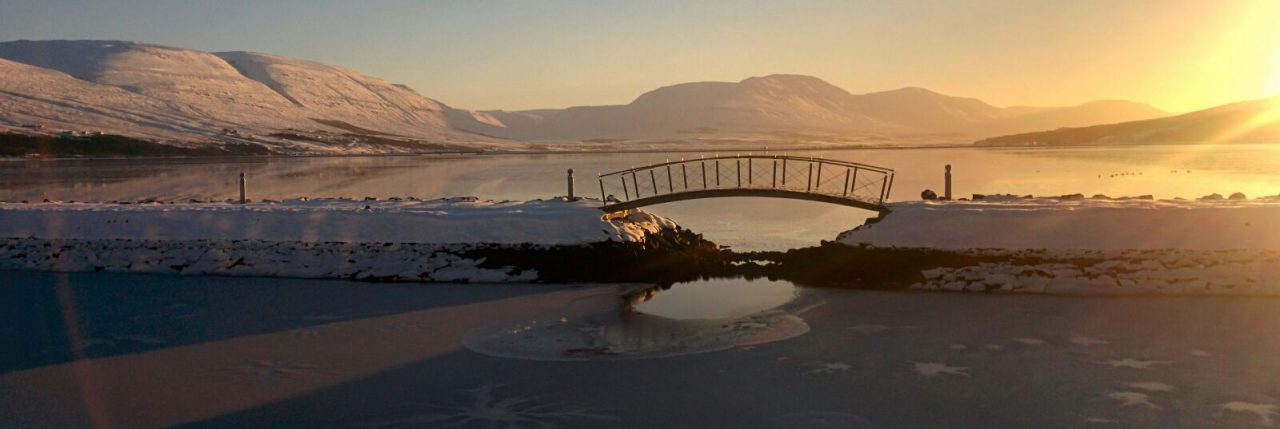
The sea, like grey silk

Image may contain: cloud, sky, mountain, ocean, outdoor and nature

The sea like grey silk
Clothes its depths in
Shimmering sadness. And
Grief is not a cliff that
Demands that you leap, but
Every shipwreck knows that
There is a limit to
How long it can keep its
Secrets in the deep before
The sea strips all veneer, and
They rise, cliff like, to crash
On unclothed shores.

On A Leash

Often you can hardly tell
It’s quite long, and extends as
You go. Almost unnoticeable until
The jerk and tightening at the
Throat. Having a dog is not all
About cleaning smelly bits.
Hold your nose, grip the leash,
And learn your frikkin limits.

For Audur, In Her New Home

A new house is always
A lovers’ dream. A consummation
Of pictures and walls, a yearning
Of spaces for filling. The many ways
In which a corner can touch
A small table, a tall vase; of
Such missed meetings as brass
Candlesticks too awkward to place
Near settees that need the light.
Such may also be the delight
Of warm floors and stockinged feet
Of open doors and a happiness to meet
Those who drink wine at your table
So that when you talk late into the night
And lights come on outside to kiss the sable
Your home is that moment when eye meets eye
And the crowded world settles down with a sigh.

Warriors I: A Reckoning Of Forces

A warrior is a funny creature
As much fierce and fire
As she is mud and mire.
As much tears as blood
As much ebb as flood.
And when once you have fought her
Seen the triumph you have brought her
You’ve done no more than teach her
That wars are won by no higher
Force than our daughters.

Warriors III

Before we had things
To put in our house
They danced in the empty spaces.
And sometimes when we sing
Of all we have lost
The night flows past in their voices.
How many times I’ve laid them down
My weapons and my defences
Only to find them forged anew
And alight in my daughters’ faces.

Seasonings

I got the baingans right tonight
(The trick is not to heat the oil
Too much) and the kala namak
Was the perfect finishing touch.
The keema also turned out quite
Well. You could hardly tell
The difference from the way
Mom used to make it. Today
I remembered how much
Dad loved the baingan slices.
So dinner turned out well (it was just
A question of adjusting memory
To spices).