Courage I

17554538_10155109330218774_3685106037944884307_n

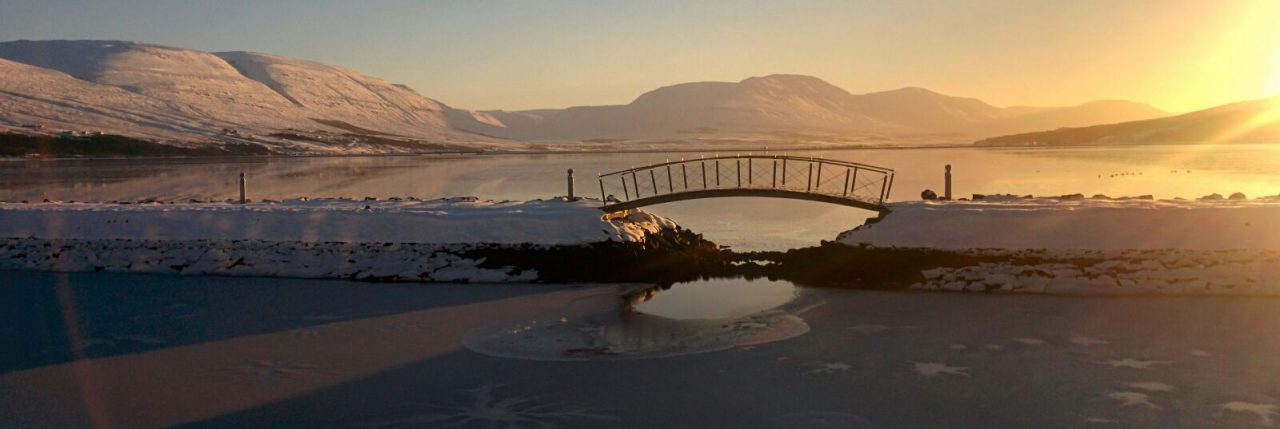
Some days I am the frozen lake
Peaceful amidst strong hills
Some days I am the petulant sun
Determined to go where I will.
The other day, I was the laden cloud
Shattered by epiphany
My brooding greys split black and white
My single sharded to many.
Today I am the jagged edges
of shorelines uncertain and sharp
Pulling away from towering pledges
Shadowed from the bright-lit heart.

I wonder if the lake I was
Runs, still, beneath the crust
If courage is not the water’s edge
Meeting what shores it must.

No Dues

(For Naomi, who walked the last mile with me)

photo-3

It took some doing.
Room to room, some
Much frequented, some
I’d never seen. The Estate
Office, for instance, being
So close to the Ladies, you
Would think, on any one
Of the many days I
Slept, bathed, re-adjusted
Myself in the midst of
Classes, commutes, pangs
Of hunger, horror,
Exhaustion. You
Would think the Estate
Office would have fallen
In my way. But they
Were the most reluctant
To sign off on the steps – millions –
That my feet walked, treading
Their real estate. Of what use
But in this one room: ‘No Dues’.

The Library, where I sit
Forever in an attitude of
Years ago – they forgot the year.
They fixed it but I sit there still
Like a reader the years refuse
To budge: ‘No Dues’.
And for the many ways and
Many days in which they fed me
The walk from the Café
To the Mess merely led me
To affectionate cooking crews:
‘No Dues’.

But the corridors did not sign
And the rooms I passed ignored
The paper I clutched. Mine
Was the eye that took in
The tiles, the bricks, stored
With years, the voices, the
Faces I feared to look in,
That I would not let go
Which I would not let loose;
What would they sign? ‘No Dues’?

What manner of reckoning requires
Such an accounting of desires?
Would the Chapel where I still
Take off my shoes, produce a bill
With ‘No Dues’? The terraces,
Which elevated our poems and views,
Let me hop back in? ‘No Dues’?
What manner of debt persists
What coinage still resists
What piece of paper insists
That I fall for this elaborate ruse
And leave this place with no dues?

New

On New Year’s Day last year
I woke up in a new home. Mine,
But not yet; loved but
Not heart-set; mine,
But a strange bed, a distant view
Of hills bathed in blue
Deep-winter light, a promise
Since redeemed. Mine,
But never before
Known. How we’ve grown
Accustomed to newness.
Familiar with not knowing how
With what words, what ink
What salutations
To greet this stranger who eats
At our table, quaffs our drink.
Not knowing if naming
Or not naming
Will drive him hence. Not wanting
To lose that which
Is always here. So dear
That no known name
Will ever change
Its forever.

This morning I woke up
In a familiar bed made new. You
Would think that this place
This house where
My children grew
Would need no naming
And part of that is true.
Yet this stranger, craning
It’s neck over my shoulder
Erasing each word I write,
Who, running beside me knew
The ache of muscles in my stride
From ship to ship, port to port
Racing from one home to another
Desperate to outpace him
This stranger has forever
Made every loved thing unfamiliar
Every borne grief new.

How may I unname him
Let me count the ways.
Not death nor loss nor absence
Or love, not sorrow nor grief
No song no poem no light above
Nor ground beneath
Nothing special or specific
Neither unique nor new
Not such that is bequeathed
To only me or even a few
Named every moment, called
Every name, beseeched
By every heart it ever threw
Always everywhere and forever
All of this is true.

Yet it has made every loved thing
Unfamiliar, every borne grief
New.

Other Nations, Other Colours


14572177_10154531451053774_5158304067276641532_n
It’s just as well, sometimes,
To see no trace of the storm.
To crunch through fallen leaves
With joy. Not to note the forlorn
Branches, that say nothing of thieves,
Or the berries that cling. In foreign climes,
It’s best not to notice, sometimes.

Such clouds that haunt the blues
Are best seen in sunny skies.
Across the path, just feet away,
Another berry tree lies.
Standing, still, you can hear it say
‘Leaves, or berries, you have to choose.
Thus much to win, thus much to lose.’

Come, Teach Us Again (For Dr.Chandra) – by Rhea Lopez

(In response to her poem Good Be with lots of love from me, and i’m sure the graduating batch of 2014.)

You taught us to never stay locked up,
By society, by Gothic manor-owning spouse,
To let out the women in our attics,
Even if they burned down the house.

(You taught us never to rely on smooth-talking Englishmen,
Come, teach us again.)

“DO NOT CALL ME, unless you’re dying,”
Was the only time you pushed us away,
Other than when we had colds and you, a concert,
To sing at the very next day.

(You taught us to rely on ourselves, not on smooth-talking Englishmen,
Come, teach us again.)

I forgive you for rereading our childhoods,
Illusions of innocence were torn,
See, the tales have always remained,
Even if the fairies have gone.

(You taught us to rely on tales, not fairies,
On ourselves, not smooth-talking Englishmen,
Come, teach us again.)

In the attendance battle post a chicken pox plague,
For two weeks, I was fighting alone.
And then, you stepped in, and the war was won,
And I learnt that I’m not on my own.

(You taught us to rely on tales, not fairies,
On ourselves, not smooth-talking Englishmen,
And whenever we needed it- to rely on you to get us through,
Come, just once more, come teach us again.)


‘Stealthy the hunter who slays his own fear’

On this hill I make my stand
Here I prepare to fight.
Below me lies embattled land
Above, the wounded light.
My foes are ranged about me
Guilt, and silence, and fear.
Selfishness and apathy
Surround me finally here.
But on this hill I stand today
No more heart to run.
And on this ground I mean to stay
Till this war is done.
For Death is not a foe, a taker of life:
Death is that comfort that wishes away strife.

Nobody wants a hero’s death.
It’s not the peace we crave.
Could one not do without
A limb or two in
The service of who
We save.
Is not another battle just
Another line in the sand?
Why must this be
The final hill
On which I make my stand.

Creation

Today I read the stuff my kids write
To my Dad. It´s not TSE, obviously,
But I watched this man of main and might

How he took each image, each phrase
And found in it its unique quality,
And found its one claim to praise,

And lifted that praise to the skies
And laughed a world of delight
Into being. Right there. Before my eyes.

Thoughts from the Icecon 2016 – The Making and Unmaking of Worlds: Part the First

Members at IceCon 2016

Or – why my books are set in Gurgaon

Reality and Fantasy, Science and Fiction: Which do you inhabit? It is convenient to think of these as separate worlds, their borders bound in the covers of books, best viewed from the seats of cinema halls, rules for engagement written in publisher’s ink, bought at a modest price, and left on your bookshelf when you weary of it. Convenient, but pointless.

Few things are more fantastical than reality. I discovered this when I first began writing fantasy. I turned for inspiration, as possibly every writer does at some point, to the things that interested me; geology, astronomy, mythology, how families become armies, why women work well together – that sort of thing. So if you asked me what was the most fantastical part of The Bones of Stars, I would say, Yellowstone Park. Which, as we all know, is more real than most things, larger and older than most things, and more likely to be the cause of the end of the world, than most things. Or if I were to say what was the most unreal thing I came across in my research for the book, I would say, the ancient provenance of the knowledge of the nebulae in the belt of the Orion constellation. Discovered a mere hundred years ago – fact; evident in myths from ten thousand years ago – also fact, just unbelievable. And if I had to say what was the heart of my books, I would say grandparents and grandkids.

So what I’m not saying, is that Jupiter’s thunderbolts are evidence of nuclear weaponry in ancient Greece, or that Ganesh’s head is evidence of cosmetic surgery in ancient India, or any of that. (Just so we’re clear.) What I am saying, is that the borders of the believable and the unbelievable are porous, and part of the job of the fantasy writer, as I see it, is to keep them that way. To make sure that there is never a brick wall that keeps out all those pesky foreign realities that threaten to cross over into our country of native realities when we aren’t looking. In that sense, Fantasy writing – my kind – is the child of the Romantics. Not just Keatsian, where the second order of ‘real’ things – buildings, monuments, Shakespeare’s Sonnets (!) – is as real as the first order – planets, the cosmos, Nature; but also a Winter’s Tale kind of Romance, where the impossible is shown to be the merely improbable, and slips into the realm of the real via a door that the playwright holds just a teeny bit ajar. It is as well to keep in mind that that door is held ajar, not just for the deeply desired, but equally, for the ferocious, and most intimately feared.

One way to think about this door, is to see it as the one that keeps the real-unreal differential open at all times. Consider the moment in First Contact, the Star Trek movie: when the first Vulcan spaceship finally lands on Earth, the doors open, and the first alien ever seen appears, the success or failure of the entire Star Trek enterprise (small ‘e’) lies in that first glimpse of the face of the Vulcan. Is he too human? Not different enough to move us out of our complacency? Is he too alien, leaving us only with a wry sense of having suspended our disbelief for nothing? Or is he (the answer is yes!) just familiar enough to leave us in our seats, and just alien enough to draw us out, and leave us with the sense of wonder that is the holy grail of the sci-fi or fantasy writer?

This is a question that JK Rowling need never ask herself or her readers, where her books create an alternate universe in which the magical is familiar, although delightful. We would actually be disappointed to find that letters arrived by postman instead of by owl, and the pressure on this kind of writer is to constantly create newer and more unexpectedly unreal things in order to keep the reader delighted. It is also important to recognise that the affect of this kind of fantasy is delight, not wonder. The capacity for wonder is lost the minute the alien world of magic becomes a familiar, Hogwartsian home for the reader and for the characters within the book.

Consider Marquez (for instance: feel free to consider any ‘magic realist’ you like; my own favourite is Allende) – there is always the chance that a woman may actually take wing and fly away while hanging up the laundry, or a house produce extra rooms for guests as needed. Sometimes wonder, sometimes delight, there is the frisson of recognition of other worlds, other lives, other happenings, just out of our reach here in the real world, which may, without warning, enter through arbitrary windows, doors, gables, cracks in the flooring. This, too, is not the wonder consequent upon the real-unreal differential being held open at all times, where the real is always present, the unreal always new.

It is possible, often, to avoid pointy hats, wands, and cleaning implements substituting as transport vehicles. And often, these are, indeed, avoided, especially by writers who write for the ‘adult’.  This is where we talk about sex and violence – look out for the exciting new sequel to this potboiler coming to a blogpost near you.
Sing me no songs of consolation


Slivers of sky string
Their silver blue through
Green and rock, stones
Strewn in their path like
Little clouds, as if to sing
To me their broken tones
Of consolation. But
Who will bravely bring
The riverbed forth. The gravel
And sand of dry grief. Who
Will raise pebbles smooth as bone
Unwritten, unscratched. What thief?
Who dare to build that dyke
That will dam the waters and read
On them their smooth, unwritten
Consolation.
If there is such a one,
To that sturdy soul I say,
Show me the pebble, worn
As my heart, one among millions
And wring from that single stone
The river that runs from me, one
Among millions. Build me that
Single dam that will make
Of that river a lake
One, among millions,
Where I may stop, and leaning,
See no face but my own, broken
As only mine is, as a river
Washes through me, a mirror
For no grief but my own.
Until then, Sing me no songs
Of consolation, no hallelujahs
Of pain sung before. I take
No comfort in the lake
Of another’s tears.
Raise me that stone, dam me that lake,
Name the face that weeps into those waters.
There are fathers enough, I know,
And no dearth of daughters,
Yet I take no solace from the songs
Of bereavement that they make.
Like a primordial flood the
Massed choirs sing of loss and losing
And drown each daughter’s voice
Added without her choosing.
And I, who have no other choice,
Silent as I hold this dam against
The breaking of that deluge, I,
Who reach into the deep only
To throw back stones I cannot
Keep. I, who float,
Face up, like the dead, and reach
For clouds that lie like stones
That lie, that sing, that preach
But have nothing to teach
Me, nothing to place
In my palms, facing upward.
I slip silently under boats that
Skim the waters, their keels
Humming, and think – you,
Who are on the boats, you
Whose shirts do not fill
With waters that run through
You; you, whose fingers strain
The river as you glide through pain
You liars, deceivers, dealers in
Consolation. I want
No part of you. I hear
Your songs but they are not
Mine. Your tears
Fall on my face but they
Are not mine. I cannot
Fashion a lyre from my breath
Unless it bespeak
This death.

Accounting For Dads

We meet every morning for
Toast and tea: what I call
Elevensies, and what he
Thinks of as a stolen snack
Behind his own back. Such
Is his faith in me. All things
Are grist for the mill that
Grinds easy and mellow. Much
Is sifted, chaff from grain; today
Even bills were brought to
The table. We settled accounts
Of the year’s remains. To weigh
Amounts on the calculator vetted
Is not easy when the soul is indebted.
I saw this as I fought to repay as
Best as I was able, kind with
Cash. Foolish to think I could find
Such a stash.