‘Not by eastern windows only’

I read it first when I was twelve,
A poem my father remembered from
His early days in school. I’m not sure
What he was thinking but we spoke of it
Often over the years. Battles waged and lost
Wars that ended in tears, hope was always
The prize. Because the quality of light
Perhaps, is also twice blest, touching
Those who are beaten and those who wield
The batons of power with the same
Vision of unrest. Every woman sitting
Through the night, every student braving
Authority’s might, every migrant
Shouting against the roar, every
Citizen courting arrest – they know
Why they fight, they know what this
Is for, they know why they persist. Hope
Is the only reward of all those who resist.

Ode to the Ordinary (with apologies to Shelley)

Hail to thee, O Ordinary Thing! Beloved
Thou never wert! If of thee I must sing
To the romantics I must revert. Because
Seriously, who even notices a handshake,
Buying bread, passing people in the hall
Whose eye you avoid if you look at them at
All? High fives, fist bumps, chatting with
An office-mate, having to trudge to lunch
Another building, same office bunch- huddle
Close in the elevator discussing what you
Ate. Yes, it is sublime, in its
Way, the unwashed beauty of the
Ordinary day, the unnoticed, unapplauded
Transience of the repetitively mundane
The ubiquitously profane.
Say it now in romantic rhyme
The Ordinary is the Skylark of our time.

Walk me a night

Walk me a night
When the chill is on the trees
Walk me a night
When no words hang in the breeze
Stroll me a winter where
The snowlines light the way
Draw me through forests when
Bark skins sing the day. But paint
Me no pictures of landscapes brown
And green. I have no faith in colours
That my heart has never seen.

How to Paint a Cloud: A Valentine’s Day’s Sonnet

Its harder than it looks; it isn’t just
White on blue. The underpainting lies
Beneath the dark as well as the light.
It really isn’t a matter of just
Slathering on the white. In fact,
By far the harder thing to do
Is coming away from the bright shades
With greys and burnt umbers and you
Must remember that the brush moves
Always from dark to light dark to light.
Love must be a lot like that, you think
Preparing your canvas just right. But really
Love is just one of the tiny, curvy vees
A bird winging itself into sight. 

Let It In

You leave in the winter and return
In the spring – a week later, but the
Burn of ice has given way to the wing
Of blue that blazes the day – and a bowl
Of white tulips is on the table. They
Wave in all directions, as if to say, ‘whole
Snowstorms have passed into these blooms.
The seasons don’t really change. In a way,
Spring is a price Winter is willing to pay,
To finally gain entrance into your rooms.’

The Impossible Stubborness of Walls

Holding out as time and space and grief
Ravage the holding in. The brazen
Promiscuity of objects that move
To new homes, and glow with the accumulation
Of new-gathered riches. The unthwarted rigour
With which the shape of things cling
To the walls which held them up, the naked nails
Rejoicing in their unreplaced importance.

The returnee is eyed askance: cupboards retaining
The unwanted residue of indecision
Refuse to acknowledge the suitcase
And carry-on items that accompany moving.
Necessity is not the driving force of need.
Items left, undiscardable, regard the rest
As mere luggage. Unstable, movable.
Lightweight air freight.

No, home is never where the heart is. Ask the walls.
The brick and mortar that stand as you walk
Ride and fly where the heart takes you. Cement
Understands immutability. The resistance of immovability.
Make new homes, go. But if you really want to leave
Use your bare hands to tear those walls down

Shipwreck at Djúpalónssandur

Ships on the horizon
Grey as the seagulls wing
The sky frothy white
Separates the living
From the free.

For some years now
Sails have troubled the waters
Their pointing heads
Drawing lines on
Shapeless fields.

How will we do
When we cannot watch from land
Like ancient swords
Our effaced edges
Belie our collective intent. 

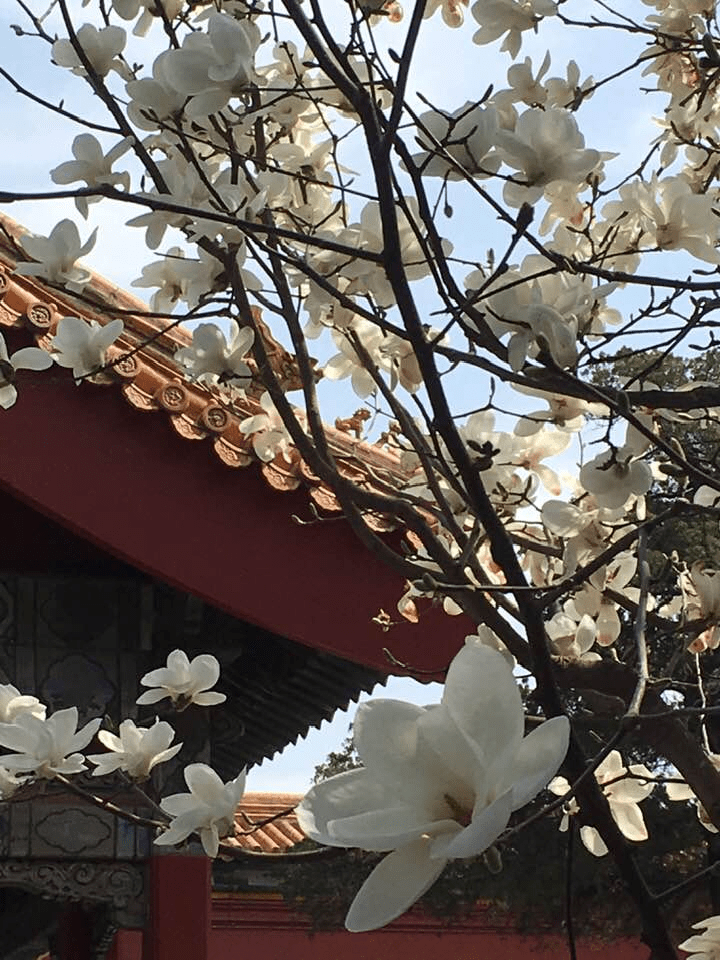
The Magnolia Tree

I watched him set up his tripod
So careful, so minute, so intent
And certainly the tree deserved
Every lens positioned, head bent
For long moments – the perfect focus
Of eye and hand, of pure blent
White bloom and winter light.
How tangible the clasp of beauty
And love. I stood so long watching
That I never saw the group of women
Posing. Laughing, jostling, they called
To him to take the picture, to hurry
As they stood under the lovely tree. 

Hraundrangi – for Gautam Sinha: one of the most courageous people I have ever known

There’s a lake there, just at the
Foot of the crags. Every time I
Pass this way I think I’mma make
It there. I know what you’re
Thinking. I need to lose fifty pounds
Get new knees, put in some serious
Cardio at the gym. I know it sounds
At best, grim. And I hear you. But
That water is deep and still, and
It sees that tortured hill and it
Takes it to its heart and sends
It back to its surface, beautiful
And blue. So I’m going to wend
My way there, weary or not. There’s
A path, I’ve seen it, it doesn’t seem
Too tough. I’ve fought my way
Through tougher. There’s not a thing
That lake can’t compensate me
For whatever I might suffer.

Burnt Sienna

It appears I’ve always lived in raw umber
With just the right amount of jesso. The
Canvas of my life lying under the
Colours of a palette mixed just so. Each
Shade a version of grey – luxurious oodles
Of white changed by a tiny dab of black. I
Wonder at the palette knife smoothing it
Down, not too sharp, no need to hack and
Carve away the artificial bright. They say
It allows the painter to create the many
Shades of light. I get it, I think. Until the time
That we run out of umber and use burnt
Sienna instead. My sleeping skin has turned
Blue. It is dazzling, not like skin but wine.
Suddenly it looks like anyone’s arm but
Mine. Maybe I should have painted by
Numbers, stuck with bases of raw umbers,
Lived dumb and painted dumber. Anything
Rather than confront this blue skinned person –
My raw-umber life’s burnt sienna version.